Food safety guide
Temperature Check Best Practices for Different Food Types: Complete Guide
Master temperature checks for every food type with our comprehensive guide. Learn specific temperatures for meat, dairy, seafood, and more. Includes charts, techniques, and safety tips.
10 March 2025

Not all foods are created equal when it comes to temperature checks. A medium-rare steak requires different monitoring than fresh sushi, and dairy products have their own unique requirements. This comprehensive guide breaks down temperature best practices for every food category, helping you maintain safety while preserving quality.
Based on FSA guidelines and industry best practices, we’ll explore the specific temperature requirements, checking techniques, and common mistakes for each food type. For the overall framework — legal requirements, daily routines, and equipment choices — see our complete guide to restaurant temperature checks. Whether you’re handling delicate seafood or robust root vegetables, this guide has you covered.
Understanding Food Risk Categories
Before diving into specific foods, it’s crucial to understand risk categories:
High-Risk Foods (Most Vulnerable)
- Support bacterial growth rapidly
- Require strictest temperature control
- Include: dairy, meat, seafood, eggs
- Check frequency: Every 2-4 hours
Medium-Risk Foods
- Moderate bacterial growth potential
- Standard temperature control
- Include: cooked vegetables, bread with fillings
- Check frequency: Twice daily
Low-Risk Foods
- Minimal bacterial growth
- Basic temperature monitoring
- Include: dry goods, whole fruits, vegetables
- Check frequency: Daily
Meat Temperature Best Practices
Beef
Storage Temperatures:
- Raw: 0°C to 4°C
- Cooked: 0°C to 4°C (if cooled)
- Hot holding: Above 63°C
Cooking Temperatures:
- Rare: 52°C core (restaurants only)
- Medium-rare: 57°C core
- Medium: 63°C core
- Well-done: 71°C core
- Minced beef: 75°C throughout
Checking Technique:
- Insert probe into thickest part
- Avoid touching bone or fat
- Hold for 15 seconds for accurate reading
- Check multiple pieces from batch
Special Considerations:
- Steaks can be served rare if seared
- Minced beef always requires 75°C
- Aged beef needs consistent 0-2°C
- Rest meat before final check
Pork
Storage Temperatures:
- Raw: 0°C to 4°C
- Must be kept separate from other meats
Cooking Temperatures:
- Whole cuts: 71°C core minimum
- Minced pork: 75°C throughout
- Bacon: 70°C if not crispy
Critical Control Points:
- Never serve pink pork
- Sausages need 75°C throughout
- Check thickest sausage in batch
- Pulled pork: maintain 63°C during service
Lamb
Storage Temperatures:
- Raw: 0°C to 4°C
- Can be aged at 0°C to 2°C
Cooking Temperatures:
- Rare: 54°C core (leg/rack only)
- Medium: 63°C core
- Well-done: 71°C core
- Minced lamb: 75°C throughout
Best Practices:
- Lamb can be served pink if whole cut
- Kebab meat requires 75°C
- Check between bones on rack
- Monitor fat temperature separately
Poultry Temperature Requirements
Chicken
Storage Temperatures:
- Raw: 0°C to 4°C (bottom shelf)
- Never above other foods
Cooking Temperatures:
- Whole chicken: 75°C in thickest part
- Breast: 75°C core
- Thighs: 80°C (better texture)
- Wings: 75°C at joint
Critical Checks:
- Three-Point Check Method:
- Thickest part of breast
- Innermost thigh
- Thickest part of wing
Common Mistakes:
- Not checking near bones
- Assuming clear juices mean cooked
- Overcrowding during cooking
- Cross-contamination during checks
Turkey
Storage Temperatures:
- Raw: 0°C to 4°C
- Defrosting: In fridge at 4°C
Cooking Temperatures:
- Whole turkey: 75°C in three locations
- Crown: 75°C in thickest part
- Rolled turkey: 75°C core
Defrosting Timeline:
- 2-3 kg: 24 hours
- 4-5 kg: 48 hours
- 6-7 kg: 72 hours
- Check temperature during defrosting
Duck and Game Birds
Storage Temperatures:
- Raw: 0°C to 3°C
- Can be aged at controlled temperatures
Cooking Temperatures:
- Duck breast: 58°C (pink) to 71°C (well)
- Whole duck: 75°C in thigh
- Wild game: 75°C throughout
Special Considerations:
- Duck can be served pink
- Wild birds need thorough cooking
- Fat renders at different temperatures
- Check skin temperature separately
Seafood and Fish Temperature Control
Fresh Fish
Storage Temperatures:
- On ice: -1°C to 2°C
- Refrigerated: 0°C to 2°C
- Display: Below 4°C
Cooking Temperatures:
- White fish: 63°C core
- Oily fish: 63°C core
- Whole fish: 63°C at thickest part
Quality Indicators:
- Temperature history affects texture
- Rapid temperature changes cause gaping
- Ice crystals indicate temperature abuse
Shellfish
Storage Temperatures:
- Live shellfish: 5°C to 10°C
- Cooked shellfish: 0°C to 4°C
- Frozen: -18°C or below
Cooking Temperatures:
- Mussels/Clams: Until shells open
- Prawns: 63°C core
- Lobster: 63°C in thickest part
- Scallops: 60°C core (or seared outside)
Critical Controls:
- Never store live shellfish in water
- Check each batch individually
- Discard if shells don’t open
- Monitor during depuration
Sushi and Raw Fish
Storage Requirements:
- Sushi-grade: -20°C for 24 hours (parasites)
- Service: 0°C to 4°C
- Display: Below 5°C maximum
Temperature Monitoring:
- Check every 2 hours
- Surface temperature critical
- Rice: cooled to 21°C within 2 hours
- Then refrigerated below 8°C
Time/Temperature Control:
- 4-hour rule at room temperature
- 2-hour display maximum
- Document disposal times
Dairy Products Temperature Management
Milk and Cream
Storage Temperatures:
- Fresh milk: 1°C to 4°C
- UHT (opened): 1°C to 4°C
- Cream: 1°C to 4°C
Service Temperatures:
- Coffee milk: Below 8°C until steaming
- Whipped cream: Below 5°C
Monitoring Points:
- Check core temperature
- Surface temperature for displays
- Monitor during delivery
Cheese
Storage by Type:
- Hard cheese: 4°C to 8°C
- Soft cheese: 1°C to 4°C
- Blue cheese: 4°C to 8°C
- Fresh cheese: 1°C to 4°C
Service Considerations:
- Can bring to room temperature for 2 hours
- Return to refrigeration after service
- Monitor surface temperature
Yogurt and Desserts
Storage Requirements:
- Yogurt: 1°C to 4°C
- Ice cream: -18°C or below
- Chilled desserts: 1°C to 4°C
Display Cabinet Checks:
- Check air temperature
- Check product temperature
- Monitor defrost cycles
Egg Temperature Protocols
Shell Eggs
Storage Options:
- Refrigerated: 4°C to 8°C (recommended)
- Ambient: Below 20°C (if consistent)
Cooking Temperatures:
- Scrambled: 71°C
- Fried: 71°C yolk
- Poached: 71°C yolk
- Omelette: 71°C throughout
High-Risk Service:
- Care homes: 75°C all eggs
- Hospitals: No runny eggs
- Schools: Fully cooked only
Liquid and Processed Eggs
Storage Requirements:
- Pasteurised liquid: 0°C to 4°C
- Frozen: -18°C or below
- Dried: Ambient (cool, dry)
Usage Temperatures:
- Defrost in refrigerator
- Use within 48 hours once opened
- Check temperature before use
Vegetable and Salad Temperature Checks
Leafy Greens
Storage Temperatures:
- Prepared salads: 1°C to 4°C
- Whole lettuce: 4°C to 8°C
- Bagged salads: 1°C to 4°C
Monitoring Requirements:
- Check wash water temperature (below 5°C)
- Monitor during prep
- Display temperature critical
Root Vegetables
Storage Options:
- Refrigerated: 4°C to 10°C
- Cool storage: 10°C to 15°C
- Some suitable for ambient
Cooked Vegetables:
- Hot holding: Above 63°C
- Cooling: To 8°C within 90 minutes
- Reheating: To 75°C
Pre-Cut Vegetables
Critical Control:
- Must be below 8°C
- Check every 4 hours
- Monitor prep area temperature
- Date and rotate stock
Bakery Products Temperature Guidelines
Bread and Rolls
Storage Temperatures:
- Ambient: Below 25°C
- Filled rolls: 1°C to 5°C
- Frozen: -18°C or below
Production Checks:
- Proving: 25°C to 30°C
- Baking: Core 94°C minimum
- Cooling: To 21°C before packaging
Cream Cakes and Pastries
Storage Requirements:
- Fresh cream: 1°C to 4°C
- Custard items: 1°C to 4°C
- Display: Below 5°C
Time Limits:
- 4 hours at room temperature maximum
- Document display times
- Check filling temperature
Pies and Pasties
Hot Holding:
- Maintain above 63°C
- Check core every 2 hours
- Discard after 4 hours
Cold Display:
- Below 8°C for meat products
- Check pastry and filling separately
Rice and Pasta Special Considerations
Rice Safety
Cooking and Cooling:
- Cook to 75°C minimum
- Cool to 21°C within 2 hours
- Then to 5°C within 4 hours total
Storage and Reheating:
- Store below 5°C
- Use within 24 hours
- Reheat to 75°C throughout
- Never reheat twice
Critical Control:
- Bacillus cereus risk
- Time/temperature crucial
- Document all stages
Pasta
Storage Temperatures:
- Fresh pasta: 1°C to 4°C
- Cooked pasta: 1°C to 4°C
- Filled pasta: 1°C to 4°C
Service Requirements:
- Hot holding: Above 63°C
- Cold salads: Below 5°C
- Check filling temperature separately
Sandwich and Ready-to-Eat Foods
Sandwich Production
Temperature Zones:
- Prep area: Below 15°C ideal
- Ingredients: Below 5°C
- Finished products: 1°C to 5°C
Monitoring Schedule:
- Check ingredients before use
- Monitor room temperature hourly
- Check finished products
Prepared Salads
Critical Temperatures:
- Storage: 1°C to 4°C
- Display: Below 5°C
- Transport: Below 8°C
Shelf Life Management:
- Date all preparations
- First in, first out rotation
- Check temperature at rotation
Frozen Food Temperature Management
Freezing Process
Initial Freezing:
- Blast freeze to -18°C core
- Within 90 minutes ideal
- Check and record temperature
Storage Requirements:
- Maintain at -18°C or below
- Check daily
- Monitor during defrost cycles
Defrosting Protocols
Safe Methods:
- Refrigerator: 4°C or below
- Microwave: Cook immediately
- Cold water: Change every 30 minutes
- Cooking: From frozen (adjust times)
Temperature Monitoring:
- Check surface temperature
- Monitor core during defrosting
- Never refreeze once thawed
Hot Holding Best Practices
Equipment Temperatures
Minimum Requirements:
- Hot cabinets: 63°C minimum
- Bain-maries: 63°C minimum
- Heat lamps: Check food not equipment
- Soup kettles: 63°C throughout
Monitoring Protocol:
- Check every 2 hours
- Stir before checking
- Multiple points for large batches
- Document all readings
Time Limits
Maximum Holding Times:
- 2 hours: Premium quality
- 4 hours: Safe limit
- After 4 hours: Must discard
Quality Considerations:
- Texture deteriorates over time
- Moisture loss occurs
- Vitamins degrade
- Flavour changes
Delivery Temperature Checks
Receiving Protocols
Temperature Requirements:
- Chilled: 0°C to 5°C
- Frozen: -15°C or colder
- Hot food: Above 63°C
Checking Procedure:
- Check vehicle temperature
- Surface check of products
- Core check of samples
- Document all readings
- Reject if out of range
Transport Monitoring
Vehicle Requirements:
- Refrigerated: Below 5°C
- Frozen: Below -18°C
- Insulated: Maintain temperature
Documentation:
- Start temperature
- Arrival temperature
- Journey time
- Any temperature breaks
Special Dietary Requirements
Baby Food
Storage Temperatures:
- Prepared formula: Use immediately
- Breast milk: 4°C for 24 hours
- Baby food: 1°C to 4°C
Heating Requirements:
- No microwaving
- Water bath to 37°C
- Check temperature before serving
Allergen-Free Foods
Separation Requirements:
- Dedicated storage areas
- Separate temperature monitoring
- Prevent cross-contamination
- Document all checks
Equipment and Calibration
Thermometer Selection
Types and Uses:
- Probe: Internal temperatures
- Infrared: Surface only
- Data logger: Continuous monitoring
- Thermocouple: High temperatures
Calibration Requirements
For a step-by-step walkthrough of both methods, see our probe thermometer calibration guide.
Daily Checks:
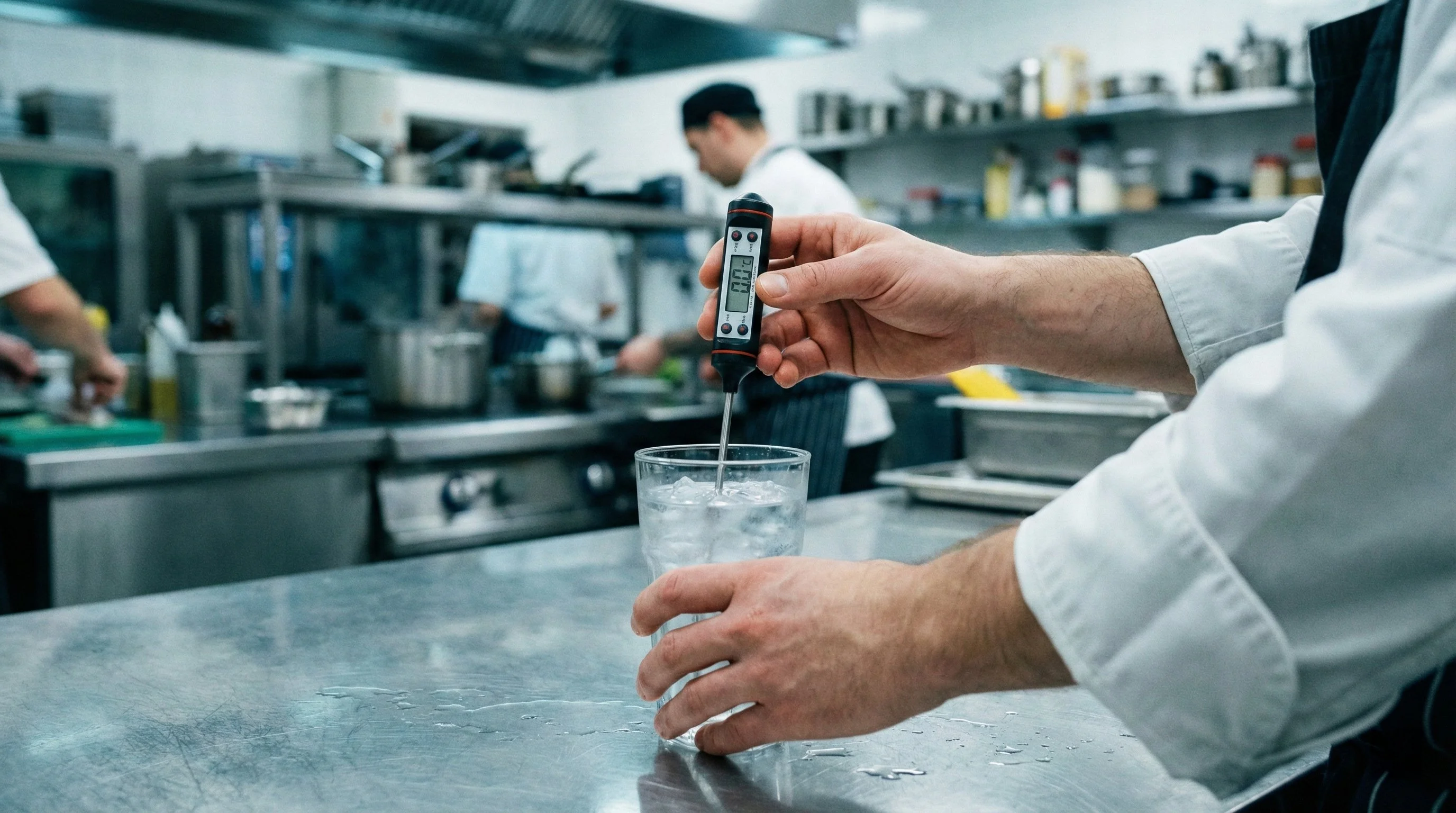
- Ice point: 0°C
- Boiling point: 100°C
- Document results
Professional Calibration:
- Annual certification
- After dropping
- If readings suspect
Creating Your Temperature Check Schedule
Daily Routine Template
Opening (7:00 AM):
- All refrigeration units
- Delivery checks
- Prep area temperature
Mid-Morning (10:00 AM):
- Hot holding equipment
- Display units
- High-risk preparations
Lunch Service (12:00-2:00 PM):
- Hot food temperatures
- Cold display units
- Cooking temperatures
Mid-Afternoon (3:00 PM):
- All refrigeration
- Any cooling foods
- Prep for evening
Closing (10:00 PM):
- Final refrigeration check
- Hot equipment off
- Document day’s issues
Common Temperature Check Mistakes by Food Type
Meat Mistakes
- Not checking thickest part
- Touching bone with probe
- Not resting before checking
- Cross-contamination between meats
Seafood Mistakes
- Overcooking due to carryover
- Not checking frozen seafood delivery
- Storing at wrong temperature
- Missing parasite control
Dairy Mistakes
- Not checking delivery temperature
- Storing at door (warmest part)
- Not monitoring display units
- Ignoring use-by dates
Vegetable Mistakes
- Assuming low risk
- Not cooling properly
- Storing at wrong humidity
- Missing wash water temperature
Technology Solutions for Different Foods
Smart Sensors by Food Type
Meat Aging Rooms:
- Continuous monitoring
- Humidity control
- Alert systems
Sushi Displays:
- Surface temperature monitoring
- Time tracking
- Automatic documentation
Dairy Cabinets:
- Multi-zone monitoring
- Door open alerts
- Temperature mapping
Conclusion: Mastering Food-Specific Temperature Checks
Success in temperature monitoring comes from understanding that different foods have different needs. By following these specific guidelines:
- Know your risk levels - Focus most attention on high-risk foods
- Use proper techniques - Right thermometer, right location
- Document everything - Especially for high-risk items
- Train your team - Everyone should know food-specific requirements
- Stay updated - Regulations and best practices evolve
Remember: The goal isn’t just compliance—it’s protecting your customers while maintaining food quality. Each food type has its own temperature story, and mastering these differences sets professional operations apart.
Quick Reference Temperature Chart
Storage Temperatures:
- Frozen: -18°C or below
- Dairy/Meat: 0°C to 4°C
- Vegetables: 4°C to 8°C
- Dry goods: Below 25°C
Cooking Temperatures:
- Poultry: 75°C
- Minced meat: 75°C
- Whole meat: 63°C-75°C
- Fish: 63°C
- Eggs (vulnerable): 75°C
- Reheating: 75°C
Holding Temperatures:
- Hot holding: 63°C minimum
- Cold holding: 8°C maximum
- Danger zone: 8°C to 63°C
Keep this guide handy, train your team regularly, and make food-specific temperature checks second nature in your operation.
Simplify temperature checks for all food types with digital monitoring. Try Forkto free for 14 days and ensure every food type is perfectly controlled.
Related Forkto software
Safe hands, clear records
Stop running food safety on paper
Forkto turns daily checks, temperature logs, HACCP and audits into a few taps on a phone. Your team stays consistent and you're always ready for the EHO.
14-day free trial · No card required